
From $0 to $10,000/Month? The Truth About Affiliate Marketing Income
Wondering how much you can earn with affiliate marketing? Discover real income examples, beginner expectations, and how to scale your earnings.
I still remember staring at my first affiliate dashboard back in the day, heart pounding after a random $23 payout from some Amazon clicks. It felt huge at the time. Then months later, nothing. Crickets. I wondered if the whole thing was a scam or if I was just terrible at it. Fast forward to 2026, and the question everyone asks is the same: "How much money can you really make with affiliate marketing?" Not the guru screenshots of $50k months. Not the "quit your job in 30 days" hype. The actual numbers, the messy middle, and what separates the folks scraping by from the ones living off it.
Most people don’t realize this: the averages get thrown around like $8,000 a month, but they’re skewed hard by the tiny percentage crushing it. Reality? A ton of beginners make close to zero for the first 6-12 months. Some hit a few hundred bucks. A smaller group builds to a few thousand. And yeah, a handful go way bigger. The industry itself is solid—global affiliate marketing spending hovering around $18-20 billion this year, driving over $100 billion in sales in some markets. But your slice? That depends on way more than luck.
I’ve seen it play out with friends, online acquaintances, and my own experiments. One guy I know started reviewing productivity software on a simple blog. Took him almost a year to crack $500/month. Now, three years in, he’s comfortably at $4-6k most months from recurring SaaS commissions. Another friend went all-in on YouTube Shorts for fitness gadgets. First six months? Maybe $150 total. But once the algorithm liked him and he added honest "what actually worked for me" stories, it snowballed to over $2k/month. No magic. Just consistency and not quitting when it felt pointless.
The Brutal Truth About Beginner EarningsLet’s rip the band-aid off. If you’re just starting in 2026, expect $0 to $1,000 per month in that first year -and that’s on the optimistic side for most. Plenty hover around $0-$500, especially if you’re still figuring out content, traffic, and what actually converts. Reports put beginners with under a year at about $636 on average, but medians are lower because so many make almost nothing early on.
Why? You’re building from scratch. Learning how to write reviews that don’t sound salesy. Figuring out where to send people without paying for ads. Dealing with algorithms that change overnight. I messed this up hard once—pumped out generic "best of" lists without ever using the products. Traffic came slow, conversions were pathetic. Switched to sharing my actual fails and wins with tools I tested myself, and things improved. Slowly.
Here’s a relatable situation: Imagine you’re a regular person with a day job. You start a blog or YouTube channel in your spare time about something you know, like home office setups or budget travel gear. Month 1-3: You publish a handful of posts or videos. Maybe $20-100 trickles in from Amazon or a couple SaaS trials. It feels exciting at first, then discouraging when the next month is $47. Most people quit here. The ones who don’t treat it like a skill they’re learning—reading what works, tweaking, posting consistently—start seeing $200-500 by month 6-12.
One story that stuck with me: A stay-at-home parent began writing about eco-friendly kids’ products. No fancy setup, just phone photos and real-life chaos of testing stuff with toddlers. First year was rough—under $1k total some months. But by focusing on problems parents actually complained about online (messy cleanups, durable toys), and adding natural affiliate links, she hit steady $6k/month after 18 months. Not overnight. Just showing up and being helpful.
What Intermediate Looks Like (The Grind Phase)After that first year or so, if you stick with it, things often shift to $1,000-$10,000 per month. This is where many "full-time" side hustlers land. You’ve got an audience, some evergreen content bringing traffic, and maybe a few strong programs paying recurring commissions.
Intermediate affiliates usually have 1-3 years in. They’ve optimized a bit—better SEO, email lists, or video habits. They diversify beyond one network. Maybe mix Amazon with higher-paying SaaS or digital products. Niche matters hugely here. E-learning or education affiliates average around $15k/month for established players. Travel can hit $13k+. Finance and tech also punch above weight because commissions or lead payouts are bigger.
But even in good niches, it’s not automatic. I know someone who built a comparison site for software tools. Year two: hovering around $2-3k. He added YouTube walkthroughs and a free email course that funneled recommendations. That pushed him closer to $8k most months. The key? He stopped chasing every shiny offer and doubled down on stuff his readers kept asking about.
Short sentences hit different sometimes. Long ones tell the story. Here’s one: you publish consistently, learn what your small audience responds to, fix the stuff that flops, and slowly the numbers climb because trust builds and search engines notice.
Most people don’t realize how much recurring income changes the game. One $50/month tool at 30% commission might only be $15 once—but if 200 people sign up through you over time and half stick around, that’s real money every month without new sales. That’s where intermediate earners start feeling momentum.
Advanced and Super Affiliate TerritoryOnce you hit 3+ years and treat it like a proper business, $10k to $100k+ per month becomes possible for the dedicated ones. These folks have authority sites, big email lists, multiple traffic sources (SEO, social, video, maybe some paid), and strong relationships with programs.
Ten-year veterans? Some reports say averages over $44k/month, but again, that’s the successful subset. Super affiliates—the top 1%—can clear six or seven figures annually, sometimes from one platform alone. ClickBank talks about Platinum and Diamond levels hitting $250k+ or even millions per year, but that’s the extreme end with huge teams or laser-focused funnels.
Real talk: very few get there. Maybe 1-5% of active affiliates reach serious six figures. The rest? Comfortable side income or full-time livings in the mid-five to low-six range if they go all-in. One guy documented going from zero to $40k/month in a couple years with aggressive blogging and promotion, but he was all-in and it wasn’t sustainable without burnout for some.
Another example: A photographer started reviewing camera gear on YouTube. Honest takes, not just hype. Built to $3k/month in commissions fairly steadily. Not flashy, but enough to support his hobby turning into income. Scale that with better niches or multiple channels, and you see how it compounds.
What Actually Moves the Needle on Your EarningsNiche is huge. High-ticket or recurring stuff (SaaS, finance, hosting, courses) pays better than low-commission physical products. But you still need traffic and conversions. A broad Amazon site might make decent volume at 3-8%, while a narrow SaaS review site converts fewer people but at much higher lifetime value.
Traffic source matters too. SEO brings free, long-term visitors who are often ready to buy. Video (YouTube, Shorts, Reels) builds faster connection—people see your face or hear your voice and trust more. Social media works if you’re consistent and authentic, but algorithms can be brutal. Email lists? Gold for repeat recommendations.
Content quality separates earners. Generic AI-written reviews? People scroll past. Personal stories, actual testing, pros/cons, who it’s for (and who should skip it)—that stuff converts. I once wrote a long post about tools that helped during a rough freelance period. Included my messy before/after. It still brings commissions years later because it felt real.
Conversion rates are another hidden factor. Most sites see 1-5% on affiliate links. Top performers tweak calls to action, page speed, trust signals, and disclosures. Always disclose— “If you buy through my link, I may earn a commission at no extra cost to you.” It’s required and actually helps honesty.
Experience multiplies everything. Newbies might earn 9x less than those with three years in, according to some surveys. You learn what works in your niche, build assets that keep earning while you sleep (evergreen content), and compound.
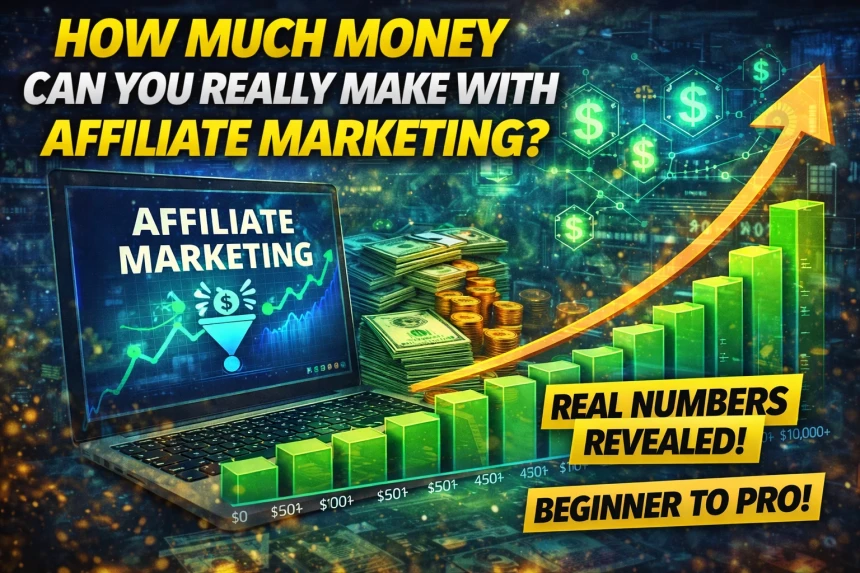
The Income Ladder in 2026 (Rough Real-World Ranges)- 0-6 months (Beginner): $0 – $500/month. Lots of learning, low traffic.
- 6-18 months (Early growth): $500 – $5,000/month. Audience building, first consistent wins.
- 18-36 months (Established): $5,000 – $20,000+/month. Multiple streams, optimization.
- 3-5+ years (Advanced): $10,000 – $100,000+/month for the committed. Authority, systems, possibly small teams.
- Super tier: $100k+/month. Rare, usually with big platforms, funnels, or influence.
These aren’t guarantees. They’re patterns from surveys and real stories. Many stay part-time and happy at $1-5k extra per month. Others go full-time once it replaces their salary.
One imperfect story: A retired person started a blog about outdoor gear for fun. Authentic comparisons, no pressure. Hit $2,500/month after a couple years—enough for travel and freedom. Not millions, but life-changing for him.
Another: Someone in finance niche built slowly with detailed guides. Now clears mid-five figures annually. He says the first year felt like shouting into the void.
Factors That Can Boost (or Kill) Your IncomeHigh-commission programs help—digital products at 40-75%, SaaS recurring at 20-40%. But only if the product delivers. Promoting junk kills trust fast.
Audience size vs quality: 1,000 engaged followers often beat 50,000 random ones. People who know, like, and trust you click more.
Diversification: Don’t rely on one program or traffic source. Algorithms shift. One platform banned or changed rules? Ouch.
Consistency beats perfection. Posting weekly for years compounds. Quitting at month four? Common mistake.
Mindset stuff: Treat it like a business eventually—track numbers, test what works, reinvest time or small ad budgets once proven. But early on, it’s mostly sweat equity.
Burnout is real. I’ve seen people chase every trend and exhaust themselves. Better to pick a niche you don’t hate and build sustainably.
Taxes and realities: Commissions are income. Track everything. In many places, you’ll owe on it. Also, platforms take time to pay out—30-60 days common.
Why the Averages MisleadThat $8k/month average? Pulled up by the big earners. Median is probably closer to $35-40k/year or less when you include all the part-timers and quitters. About 80% earn under $80k/year total, 15% in the $80k-$1M range, and a sliver above. 35% or so hit at least $20k annually once established.
The industry grows because brands love paying only for results. But for you, it means patience. Most success stories have a 1-3 year ramp-up.
Here’s my take: Affiliate marketing can replace a job or add serious side cash, but it’s rarely passive at first. It rewards helpfulness over hype. In 2026, with AI flooding content, being genuinely human—sharing real experiences, flaws included—still cuts through.
I know folks making coffee money. Others quitting day jobs. A few building empires. The difference? Showing up when it’s boring, focusing on value, and learning from the slow months.
If you’re thinking of starting, go in eyes open. First commissions might be tiny. Celebrate them anyway. Build the habit. Pick something you can talk about without cringing. Test, tweak, repeat.
The money is real for those who treat it seriously. Not everyone gets rich, but plenty build something sustainable that beats scrolling for side gigs. It’s not easy money. It’s earned money, with all the frustration and satisfaction that comes with it.
Some weeks you’ll check analytics and wonder why you bother. Other weeks a random post from six months ago suddenly spikes and pays your bills. That’s the ride.
If this sounds like something you’d stick with, start small. Write one honest review or film one real-use video. Publish it. See what happens. Adjust. Keep going.
The internet’s noisy in 2026. Your authentic take on products that actually help people? There’s still room for that. And yeah, it can pay.